

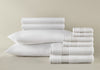

A comfortable night's sleep begins with the right bedding, especially for those who tend to sleep warm or experience night sweats. While adjusting the room temperature or choosing a lighter blanket can help, the fabric closest to your skin plays an equally important role.
The best cooling sheets are designed with breathability in mind, allowing air to circulate and helping moisture move away from the skin. Understanding how different fibers and weaves affect sleep comfort is the first step toward choosing sheets that feel as good as they look.
Key Takeaways
- Fabric and weave matter far more than thread count for sleeping cool.
- Percale promotes airflow, while linen helps manage heat and moisture. Sateen’s denser weave tends to retain more warmth.
- Night sweats and general warm sleeping are different problems with different answers.
- Linen is a strong choice for night sweats because it helps manage moisture and dries quickly.
- Sheets work best as part of a system, with breathable layers above and below.
Understanding Night Sweats and Their Causes
Night sweats can have a range of causes, from hormonal changes to environmental factors. While bedding cannot address underlying medical conditions, choosing the right fabrics can help create a cooler, more comfortable sleep environment.
Common Causes
Hormonal changes are among the most common triggers, which is why night sweats come up so often during perimenopause and menopause. Certain medications may also contribute to night sweats as a side effect.
Your sleep environment is another consideration. Room temperature, bedding materials, and even your mattress can influence how much heat is retained throughout the night. Memory foam mattresses, in particular, can retain body heat and contribute to a warmer sleeping surface.
The Role of Breathable Sheets
The right sheets can make a meaningful difference in how comfortably you sleep. Throughout the night, breathable fabrics allow heat and moisture to move away from the skin, while less breathable materials may trap warmth and contribute to discomfort.
Thread count often receives the most attention, but it isn't necessarily an indicator of breathability. Higher thread counts can sometimes mean a denser weave that restricts airflow. The more important considerations are the fiber itself and how the fabric is woven.
What Makes a Sheet Sleep Cool
Two things: the fiber and the weave. Fiber determines how the material handles moisture. Weave determines how much air moves through it. A cooling claim on a label means very little without both.
Percale: Crisp and Breathable
Percale is a plain, one-over-one-under weave with a matte finish and a crisp feel. That structure leaves space between the threads, so air passes through easily.
The result is the cool, smooth sheet you find in a well-made hotel bed. Percale sleeps noticeably cooler than a silkier weave, and it stays that way through the whole night rather than only the first few minutes.
Percale is a strong option for anyone who runs warm but does not want to wake up soaked. Shop Percale Sheets at Peacock Alley to find the best option for your bed.
Linen: Naturally Moisture-Wicking
Linen comes from flax, and the fiber is hollow. It absorbs a considerable amount of water before it feels damp, then releases it into the air quickly.
Breathability alone helps a warm sleeper. Moisture management is what helps someone who is genuinely sweating, and that is what distinguishes linen from every other option.
Linen also softens with every wash rather than wearing down, which is part of why linen sheets tend to get better over years of use. Start your journey with linen today by browsing Peacock Alley’s linen sheets.
Sateen: A Different Kind of Luxury
Sateen is woven with more threads sitting on the surface, which gives it that smooth drape and subtle sheen. It is the fabric most people picture when they picture luxury bedding, and for good reason.
That same density is why it holds warmth. Sateen is wonderful in a cool bedroom or a cold month, and it is the wrong option for a night sweat problem.
None of this makes sateen a lesser fabric. It solves a different problem. If you love the drape, pair it with a cooler room and lighter top layers. Shop Peacock Alley’s sateen sheets for that ultimate luxury feel.
Choosing the Right Fit for How You Sleep Hot
Running warm and having night sweats are two different experiences, and they point to different fabrics. Knowing which one describes your nights makes the choice simple.
If You Run Warm
- You kick a foot out from under the covers.
- You prefer the room a few degrees cooler than everyone else.
- You wake up warm sometimes, but the sheets are dry.
Percale handles this well. The airflow through the weave is usually enough on its own, and you get that crisp, cool feel that makes getting into bed one of the better moments of the day.
If You Wake Up Damp
This is a different problem. Air moving through the fabric helps, but moisture sitting against your skin is what wakes you and keeps you awake.
Linen is the answer here. The fiber pulls moisture away and dries fast enough that you are not lying in it for the rest of the night.
Quick Tip: Consider one more adjustment. Swap a heavy down comforter for a lighter linen or cotton duvet cover. A breathable sheet under a heat-trapping top layer will only get you halfway. Shop luxury blankets and more at Peacock Alley.
Building a Cooler Sleep System
Sheets are one layer of three or more. What sits under you and over you both change the result.
Your mattress under you is an important factor. Memory foam holds heat, and no sheet can fully compensate for a surface that warms up all night. A breathable mattress topper addresses that issue directly. See our guide to cooling mattress toppers to learn more.
Over you, weight and fiber are just as important as your sheets. A lighter linen duvet cover breathes, but a dense synthetic comforter does not.
Get all three layers working in sync, and you’ll quickly feel the difference.
Sheets for Night Sweats at Peacock Alley
Peacock Alley has been making bed linens since 1973, sourcing long-staple cotton and European flax through mill partnerships built over decades. Less than three percent of the world’s cotton meets our standard.
Fabric is hard to judge from a photograph. We offer free swatches so you can see and touch the material before committing, and shipping is complimentary on orders over $250.
Cooling is a function of fiber and weave, and percale and linen have been doing it best for centuries. Start with linen if you wake up damp. Start with percale if you simply run warm. Either way, you are choosing a sheet that will still be doing its job years from now.
Explore Peacock Alley's breathable sheet collections. Shop All Sheet Sets
Frequently Asked Questions
What naturally stops night sweats?
Lowering room temperature, using breathable bedding, and avoiding alcohol, spicy foods, or heavy meals near bedtime are the most effective lifestyle adjustments. Staying hydrated and practicing relaxation techniques before sleep can also help minimize triggers. However, if night sweats are persistent, severe, or accompanied by fever or unexplained weight loss, consult a doctor to rule out underlying medical conditions.
Do bamboo sheets really help with night sweats?
Yes. Bamboo viscose is naturally moisture-wicking and breathable, making it a great choice for hot sleepers. However, flax linen absorbs moisture faster, dries quicker, and is significantly more durable over years of frequent washing. If you prefer a silky, cool-to-the-touch feel, choose bamboo; if maximum sweat absorption and long-term durability are your priorities, go with linen.
What is the best fabric for sheets if I wake up sweating?
Flax linen is the top choice because its hollow fibers absorb up to 20% of their weight in moisture before feeling damp, while drying exceptionally fast. Cotton percale is the best alternative, offering a crisp, lightweight plain weave that maximizes airflow. Silk and bamboo are also suitable options, but linen remains superior for managing heavy night sweating and maintaining a dry sleeping environment.
Are linen sheets better than cotton for hot sleepers?
It depends on whether your primary issue is trapped heat or excess moisture. Cotton percale offers unmatched airflow and a lightweight, crisp feel that works best if you simply run hot. Linen excels if you wake up visibly damp, as its thick, structured fibers wick away sweat much faster. Choose percale if you want pure breathability, and linen if you need heavy-duty moisture control.
How often should I wash sheets if I have night sweats?
Wash them every three to four days instead of the standard once-a-week routine. Frequent washing removes accumulated sweat, body oils, and dead skin cells that can weaken fabric fibers, harbor bacteria, and trap odors. Both cotton percale and linen withstand constant laundering exceptionally well, with linen actually growing softer, smoother, and more comfortable over time as its natural pectin breaks down.