


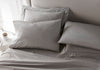
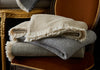
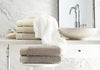
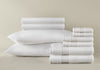

Bedding texture is what gives a well-styled bed depth. You have seen the difference: every layer may be beautiful on its own, but when each has the same smooth finish, the bed can still feel flat. The key is variation in surface—mixing weaves, finishes, and materials that create contrast without disrupting the overall palette. This guide breaks down the textures to look for and how to layer them well.
Key Takeaways
- Texture creates depth by changing how light moves across the bed, which color on its own cannot do.
- Five texture families cover most bedding: smooth sateen, matte percale, slubbed linen, dimensional waffle and matelassé, and tonal embroidery.
- The softest surface belongs where skin touches, so sheets should carry the least texture.
- Dimensional relief belongs on your coverlet or blanket layer, which is the largest visible surface on the bed and the furthest from your skin.
- About three distinct textures is the practical cap before depth turns into clutter.
What Texture Adds Beyond Color
Color sets the mood of a room, while texture gives the bed dimension. Different surfaces catch and reflect light in different ways, creating the subtle highlights and shadows that keep a layered bed from looking flat.
A bed dressed entirely in white can still have plenty of visual interest. Pair smooth sateen sheets with a waffle-weave blanket and a matelassé coverlet, and each layer brings something different. Light glides across sateen, settles into the grid of a waffle weave, and emphasizes the raised pattern of matelassé.
This is what makes texture so useful: it adds depth without relying on more color or pattern, allowing even a simple palette to feel layered and considered.
Depth comes from how surfaces catch light, not from how many colors you introduce.
Choosing and Layering Texture
The most effective bedding combinations balance contrasting surfaces rather than relying on color alone. From smooth sateen to dimensional matelassé, each texture changes the look and feel of the bed—and how it works with the layers around it.
Smooth and Lustrous
Sateen has a smooth surface with a subtle sheen and fluid drape. Its weave allows more yarn to float across the surface, giving the fabric its characteristic softness and luster.
That quiet surface makes sateen a natural base for more dimensional layers. Used for sheets, it adds softness against the skin while allowing the texture of a coverlet, blanket, or duvet to take greater visual prominence.
Crisp and Matte
Percale has a crisp, matte surface created by its simple one-over-one weave. Without the subtle sheen of sateen, it has a clean, understated appearance often compared to a freshly pressed shirt.
The difference is especially noticeable in white. Percale appears cool and matte, while sateen catches more light and has a subtle luster. As a base layer, percale brings a crisp simplicity that pairs easily with more dimensional textures layered above it.
Relaxed and Lived-In
Linen carries its texture in the fiber rather than the weave. Flax yarns naturally vary in thickness, creating subtle irregularities known as slubs that give the fabric its distinctive surface.
That natural variation gives linen bedding depth even in a simple, pattern-free white. Its relaxed texture also contrasts beautifully with smoother fabrics like sateen or crisp percale, while becoming softer and more supple with every wash.

Product Spotlight: Our European Washed Linen Duvet Cover carries that slub and softness in a range of neutrals, so the texture comes through no matter which color you choose.
Raised and Dimensional
Matelassé, waffle weave, and quilting create true dimension, with raised surfaces that give the bed depth through both touch and appearance.
Matelassé is a double cloth technique that raises a padded pattern without batting. Our coverlet guide explains how this construction differs from a quilt or bedspread.
Waffle weave raises a grid of squares with recessed “walls” between them, and those pockets trap air. This unique structure creates a substantial blanket without heavy, suffocating weight. The grid throws small shadows across itself, adding dimension even in a single color. You’ll see this texture most commonly in coverlets and bedspreads.
Product Spotlight: The Montauk Matelassé Coverlet is a good example, its padded pattern gives a bed real, touchable relief.
Embroidered and Detailed
Embroidery can add texture without introducing another color. White-on-white borders, tonal stitching, and monograms subtly raise the surface, giving light something to catch while keeping the palette cohesive. Because the detail is concentrated rather than allover, embroidery is also an easy way to introduce texture in smaller, more deliberate doses.
How to Choose Texture for Your Bed
Once you understand how different surfaces behave, the next step is deciding where each one belongs.
Anchor with One Understated Base
Sheets should generally carry the least texture on the bed. Because they are in direct contact with your skin, feel and comfort should lead the decision.
Sateen and percale both work well as a foundation. Sateen brings a smooth surface and subtle luster, while percale has a crisp, matte finish. Keeping this layer relatively simple gives more dimensional pieces room to stand out without competing for attention.
Put the Dimension on Top
The coverlet or blanket is where you can introduce a more pronounced texture. As one of the largest visible surfaces on a made bed, it can carry a waffle weave, matelassé pattern, or quilted finish without overwhelming the overall look.
It is also one of the simplest layers to change. Replacing a smooth blanket with a dimensional coverlet can shift the character of the entire bed without changing the sheets beneath it or the surrounding color palette.
Keep the Mix Considered
Two or three distinct textures are often enough to create depth while allowing each surface to remain visible. Add too many, and the contrast between individual pieces begins to disappear.
The third texture is best added through something small and flexible. A pair of throw pillows or a folded throw blanket provides a low-stakes accent, allowing for quick seasonal refreshes.
Product Spotlight: A folded Fairmount Cashmere Throw at the foot of the bed adds exactly this kind of easy, swappable accent.
Conclusion
Texture gives a bed dimension without relying on additional color or pattern. And creating that contrast does not require starting over. One well-chosen dimensional layer—a coverlet, blanket, or throw—can change the character of the bed while working with the pieces you already own. It is also one of the simplest layers to change as the season or room evolves.
Frequently Asked Questions
What are the different types of bedding materials?
Bedding materials divide into a few core categories: cotton in various weaves, linen derived from flax, silk, and blended fabrics. Within cotton alone, sateen, percale, waffle, and matelassé each display unique characteristics while sharing a single source fiber.
What are the different textures of blankets?
Blanket textures range from flat woven cotton with almost no relief to waffle weave, cable knit, quilted and fleece. Waffle and knit blankets display the most pronounced dimension, whereas a flat woven blanket rests closely against the layer beneath it.
What is the softest fabric for bedding?
Silk and sateen offer the gentlest tactile surface when brand new. Linen starts firmer and softens with every wash, often becoming the most comfortable option over time.
What bedding is used in 5-star hotels?
Most five-star hotels use crisp white percale or sateen cotton, chosen to hold up through commercial laundering. Hotels typically introduce a visual dimension through a quilted coverlet rather than the sheets.