




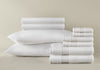

Deciding between percale and sateen sheets can seem like choosing between two equally alluring luxuries, as each offers a distinct experience that touches more than just your skin. At Peacock Alley, we believe that the path to a perfect night’s sleep begins with understanding the subtle art of weaving. When it comes to bedding, while thread count and cotton quality are important, how your sheets support your sleep style season after season is important as well. Let’s unravel the differences so you can discover the fabric that suits your slumber best.
Understanding the Main Difference Between Percale and Sateen
The difference between percale and sateen begins with the weave. While both can be made from the same high-quality long-staple cotton, their textures and finishes are shaped by how the threads are woven. Percale is known for its crisp, cool feel, while sateen has a pristine, silky surface.
You’ll find both options in our Percale Sheets and Sateen Sheets collections, but the choice comes down to how you prefer your bed to feel every night.
Egyptian cotton is a type of cotton, not a weave. It can be woven into either percale or sateen, so you can find Egyptian cotton percale sheets and Egyptian cotton sateen sheets. The difference comes from the weave style, not the cotton itself.
What is Percale? The Crisp and Cool Classic
Light and breathable, percale is a go-to for those who prefer a clean, cool sleeping surface. It’s simple, timeless, and quietly luxurious, like freshly laundered cotton shirts drying in a summer breeze.
The Percale Weave Explained
Percale is made using a one-over, one-under weave, creating a balanced, grid-like structure. This pattern gives the fabric a soft, matte finish and a crisp hand, similar to a high-end button-down shirt. The weave also allows air to move easily, so it’s naturally breathable and ideal for warmer nights. With every wash, percale becomes softer without losing its structure, making it a favorite for those who value comfort that builds over time.
Key Benefits of Choosing Percale
If you’re a warm sleeper, percale’s breathable weave and moisture-wicking qualities help keep you cool and dry. The finish is clean and understated, perfect for a relaxed, lived-in look. Over time, the fabric softens beautifully, making it more inviting with each wash.
Explore our Boutique Sheets to experience the charm of percale in its most refined form.

Boutique Percale Sheet Set
Boutique Percale Flat Sheet
Boutique Percale Pillowcases
Boutique Ivory Percale Sheet Set
Not all pillowcase fabrics feel or perform the same. This guide breaks down how silk, linen, percale, and sateen compare in terms of texture, temperature, and care, so you can choose the best option for your skin and sleep habits.
What is Sateen? The Smooth and Silky Alternative
Sateen offers a softer, more substantial touch. With a pristine surface and gentle luster, it’s a favorite for anyone who enjoys a cozy, elegant bed with a little more weight and warmth.
The Sateen Weave Explained
Sateen is woven using a four-over, one-under pattern. This technique places more threads on the surface, giving the fabric a subtle sheen and a silky feel. The result is a denser weave that drapes closely to the body, wrapping you in a gentle warmth. It has a natural weight that gives the bed a pristine, tailored look, ideal for creating a polished, inviting retreat.
Key Benefits of Choosing Sateen
Sateen has a buttery-soft touch that’s gentle against the skin. It’s naturally more resistant to wrinkles than percale and retains warmth exceptionally well, making it an excellent option for cooler sleepers or air-conditioned rooms.
The Emily Egyptian Cotton Sheet Set features long-staple Egyptian cotton woven in a smooth sateen for a soft, luminous feel. It’s ideal if you want a warmer, more substantial sheet with a refined, tailored look.
Emily Egyptian Cotton Sheet Set
Emily Egyptian Cotton Pillowcases
Soprano Stripe Sateen Sheet Set
Soprano Stripe Sateen Pillowcases
Percale vs. Sateen Cotton: Side-by-Side Comparison
Both percale and sateen are made from high-quality cotton, but the weave gives each its own personality. Here’s how they compare in key areas that are the most important for your sleep experience.
Breathability and Temperature Regulation
Percale is light and airy, making it an ideal choice for warm nights and hot sleepers. The open weave encourages airflow and keeps heat from getting trapped. Sateen, with its denser structure, has a gentle insulating effect. It’s great for cooler weather or those who prefer a cozier sleep environment. Many people choose percale in the summer and sateen in the winter to match the season.
Texture and Hand-Feel
Percale has a crisp finish with a subtle “snap” to the touch, so it’s cool, clean, and soft without being slick. Sateen is softer and silkier, with a gentle glide across the skin. Those with sensitive skin often gravitate toward sateen for its smoothness, while others enjoy the refreshing texture of percale.
Appearance and Drape
Percale has a matte look that feels relaxed and unfussy. It tends to float above the body, giving a light, breathable sleep experience. Sateen has a soft sheen and a heavier drape that hugs the body and the bed for a tailored look. Each brings a different mood to the room, casual ease versus refined elegance.
Durability and Care
Percale’s tight weave is naturally strong and stands up well to frequent washing. Over time, it softens while keeping its structure. Sateen’s exposed surface threads make it more prone to piling if not cared for properly, but it rewards gentle treatment with long-lasting softness. Both types benefit from mild detergents and rotating sheets to preserve their quality.

Beyond the Weave: Why Material and Thread Count Matter
While the weave shapes the texture, the quality of the cotton sets the foundation. Both percale and sateen perform best when made from long-staple cotton, which produces softer, stronger yarns. Thread count is essential as well, but only up to a point. The ideal range is usually between 300 and 500, depending on the weave. Higher thread counts don’t always mean better quality; what truly counts is the length of the fibers and the craftsmanship of the fabric.
Thread count is often misunderstood and doesn’t tell the whole story of sheet quality. This guide explains what thread count really means, why higher isn’t always better, and how weave and cotton quality matter more when choosing sheets.
Which Should You Choose? Matching Your Sleep Style to the Perfect Sheet
Choosing between percale and sateen sheets depends on how you sleep and what makes you comfortable. Here’s how to match the weave to your sleep habits.
The Best Choice for Hot Sleepers
If you tend to wake up warm or live in a warmer climate, percale is an excellent match. Its breathable weave lets air circulate and moisture to evaporate quickly, ensuring you stay cool throughout the night.
The Best Choice for Year-Round Luxury
If you prefer a soft, pristine bed that feels more substantial, sateen is the perfect fit. It’s exceptionally comfortable in cooler rooms or during fall and winter. With a refined drape and velvety finish, sateen delivers a warm and inviting sleep experience year-round.
The Soprano Sateen Sheet Set offers a smooth, substantial feel that’s comfortable in both cooler months and air-conditioned rooms. Its elegant drape and soft hand make it a strong choice if you want a polished bed that feels inviting year-round.
Caring for Your Luxury Bedding to Ensure Longevity
To keep your sheets looking and feeling their best, wash them in cool or warm water with a gentle, liquid detergent. Avoid bleach and fabric softeners, which can weaken the fibers over time. Tumble dry on low and remove promptly to minimize wrinkles, particularly for sateen. Rotating between two or more sets also allows each to rest between uses, thereby extending their life and softness over the years.
Wash sateen sheets in cool or warm water using a gentle, liquid detergent to protect the surface fibers. Tumble dry on low heat and remove promptly to help prevent wrinkles and reduce the chance of pilling over time.
Finding Your Perfect Night’s Sleep
The ideal bedding completes your bedroom, but it also enhances the way you rest and recharge. Are you drawn to the crisp feel of percale or the pristine drape of sateen? Either way, understanding the difference lets you create a bed that matches your sleep style.
Key Takeaways:
- The main difference between percale and sateen is the weave, not the material.
- Percale is lightweight, breathable, and matte, which is ideal for hot sleepers.
- Sateen is soft, warm, and slightly lustrous, so it’s great for cooler environments.
- Both perform best when made from long-staple cotton and cared for properly.
- Your personal comfort preferences are the best guide for choosing between the two.